|
Lesson 1: The Meaning of “Being More”
Key Principle: Being more is not about doing more alone—it is about becoming more together.
To define Being More is to move beyond transactional interactions toward meaningful relationships that expand capacity and impact. Growth does not happen in isolation. It happens when people align strengths, share vision, and invest in each other’s success.
Being more means:
- Expanding perspective beyond personal expertise
- Valuing relationships as engines of progress
- Choosing collaboration over competition
- Measuring success by shared outcomes, not individual credit
In collaborative environments, people do not lose identity—they gain dimension. The act of partnering sharpens clarity, strengthens purpose, and accelerates results.
Lesson 2: The Value of Relationships in Collaboration
Key Principle: Relationships are infrastructure.
In partnerships and collaborations, relationships determine longevity, trust, and effectiveness. Ideas may spark interest, but relationships sustain momentum. Without trust, even the most promising initiatives collapse.
Strong collaborative relationships provide:
- Stability during uncertainty
- Accountability without control
- Honest feedback without fear
- Resilience during challenge
In professional alliances, relationships are not optional—they are essential. Investing in relationship-building early prevents misalignment later. It establishes clarity around expectations, communication styles, and shared responsibility.
Lesson 3: The Power of Searching
Key Principle: Intentional searching leads to intentional partnering.
Strategic relationships begin with curiosity and research. Searching is not about collecting contacts—it is about identifying alignment. The goal is to understand who someone is, what they value, and how they contribute.
Effective searching includes:
- Reviewing professional history and achievements
- Understanding mission statements and stated values
- Observing patterns of integrity, consistency, and impact
- Listening to how others describe working with them
This stage filters noise from substance. It clarifies who is aligned with your vision and who simply overlaps in surface interest. Searching sets the stage for thoughtful connection, not random networking.
Lesson 4: Intuitive Vetting
Key Principle: Alignment is proven through interaction, not credentials.
True vetting goes beyond résumés and reputation. It requires conversation, observation, and time. Vetting is about understanding character, reliability, and collaborative capacity.
True vetting asks:
- How does this person communicate under pressure?
- Do their actions match their stated values?
- Are they open to shared leadership?
- Do they listen as much as they speak?
Vetting is not judgment—it is due diligence. It protects the integrity of partnerships and prevents future conflict. When done respectfully, vetting strengthens trust and sets realistic expectations.
Lesson 5: Leading by Example
Key Principle: The strongest partnerships are modeled, not demanded.
Leadership in collaboration is not positional—it is behavioral. People follow examples more readily than instructions. To lead by example is to embody the values you wish to see in others.
Leading by example means:
- Showing up prepared and present
- Communicating transparently
- Honoring commitments
- Sharing credit generously
- Taking responsibility when things go wrong
In collaborative environments, leadership is contagious. When one person models integrity, humility, and accountability, it sets the tone for the entire alliance.
Lesson 6: Forming a Strategic Alliance
Key Principle: Strategic alliances are built on complementary strengths.
A strategic alliance is not a friendship—it is a purposeful partnership formed to achieve outcomes neither party could accomplish alone. It requires clarity, respect, and intentional structure.
Steps to forming a strategic alliance:
- Identify mutual benefit – What does each party gain?
- Define roles clearly – Who leads what, and why?
- Align values and vision – Are long-term goals compatible?
- Establish communication norms – How decisions are made
- Agree on metrics of success – What progress looks like
Strategic alliances thrive when expectations are explicit and flexibility is mutual. They are strengthened by shared accountability and ongoing dialogue.

Lesson 7: Creating a Common Mission
Key Principle: A shared mission transforms collaboration into movement.
A common mission is the unifying force that binds collaborators together. It provides direction, meaning, and motivation beyond individual tasks. Without a shared mission, partnerships drift. With one, they advance.
To create a common mission:
- Identify shared values
- Articulate a clear problem or opportunity
- Define the impact you seek to create
- Frame the mission in inclusive language
A strong mission answers the question: Why does this matter beyond us? When people connect to purpose, commitment deepens and effort multiplies.
Lesson 8: Inspiring Others to Do More
Key Principle: Vision invites people beyond their current limits.
Inspiring others is not about pushing—it is about pulling them toward possibility. When people see how their contribution fits into a larger vision, they naturally rise beyond routine tasks.
Inspiration grows when leaders:
- Communicate vision consistently
- Recognize contributions meaningfully
- Encourage creative input
- Provide space for growth and learning
Doing more does not mean working harder—it means working with greater intention and impact. When people feel seen, valued, and aligned, they bring their best selves to the collaboration.
Lesson 9: From Tasks to Purpose
Key Principle: Tasks sustain work; purpose sustains people.
Being more requires moving beyond task completion toward mission fulfillment. In collaborative settings, this shift transforms effort into engagement.
Encourage collaborators to:
- See how their role connects to the bigger picture
- Take ownership beyond job descriptions
- Suggest improvements and innovations
- Mentor others within the alliance
Purpose-driven collaboration builds momentum. It turns partnerships into platforms for growth and leadership development.
Conclusion: Defining Being More
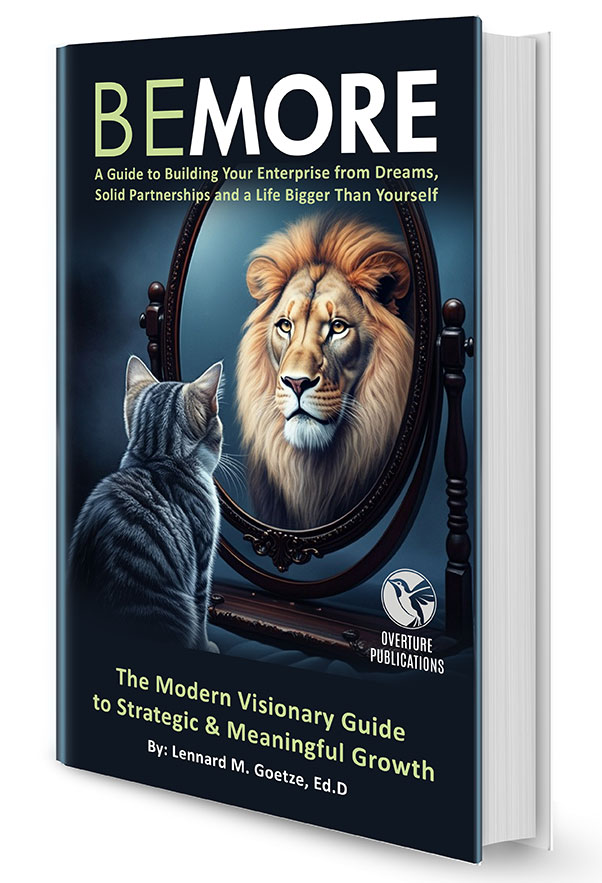
Being more is a mindset, a practice, and a commitment. It is the decision to invest in relationships as catalysts for growth, to collaborate with intention, and to lead with integrity.
Through relationship building, strategic alliances, and shared mission, individuals move beyond isolated effort into collective power. BeMore is not about accumulation—it is about alignment. When people connect deeply, vet thoughtfully, lead authentically, and build together, they don’t just achieve more.
They become more—together. |